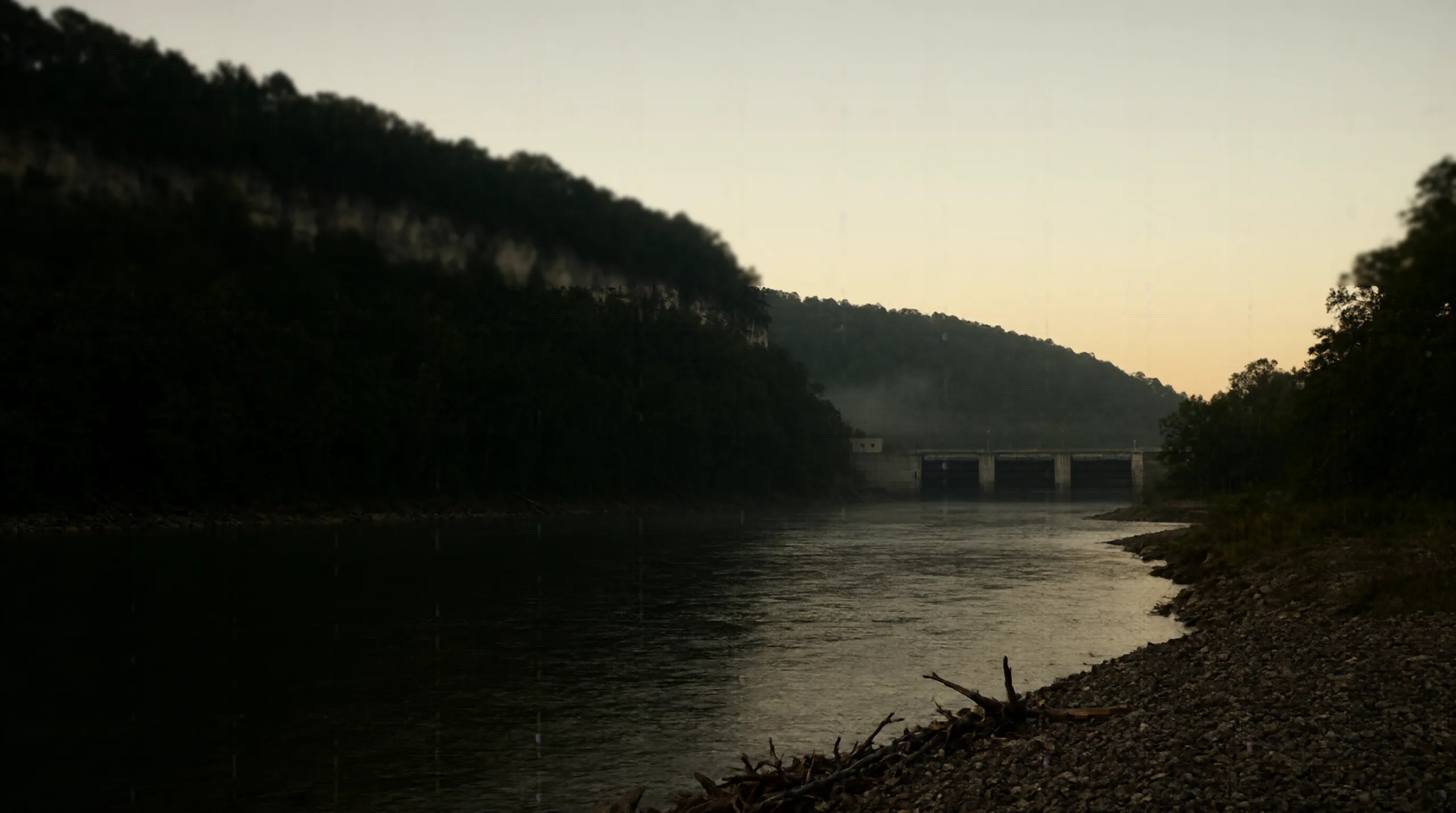
Franklin County · Arkansas · 38 miles east of Fort Smith
Pest control in Ozark, AR
Franklin County’s seat on the Arkansas River, gateway to the Pig Trail
Ozark is the seat of Franklin County, sitting on the Arkansas River where Highway 23 — the Pig Trail Scenic Byway — climbs north into the Ozark National Forest. It is the meeting point of river valley and highland, and that transition shapes every pest problem here.
- Independent
- Licensed & insured
- Free & no obligation
- Local to the River Valley
About the area
What makes Ozark different
Ozark sits at a bend in the Arkansas River at the foot of the Boston Mountains, where Highway 23 turns north toward the Ozark National Forest and the Talimena country beyond. The town has been the seat of Franklin County government since the 1830s and remains the commercial centre for a wide rural area.
The river valley here is broad and agricultural, while the land rises sharply to the north into dense hardwood forest. A property in town has a river-valley pest profile; a property fifteen minutes up Highway 23 has a highland woodland one. The difference is real and it changes the treatment plan.
That geographic range — river bottom to mountain timber — makes Ozark one of the more interesting service areas in the region for anyone who does this work properly.
Housing & construction
A genuine mix: older town homes in the centre, agricultural properties around the valley, and recreation or residential properties climbing into the hardwoods along Highway 23. Location relative to the river or the forest matters more than the age of the house.
Climate & terrain
The valley floor is hot and humid in summer; the highlands north of town are several degrees cooler with heavier dew and more shade. The mountain roads also see more rainfall and more standing water in shaded hollows.
Local pressure
What we see in Ozark
Every community in the River Valley has the same broad set of pests. What differs is the proportion — and that is what determines which problems actually show up in your house, your lawn and your outbuildings.
- High
Subterranean termites
River-bottom soil and older construction in town.
- High
Ticks
The hardwood forest north of town and pasture margins.
- High
Mosquitoes
River bottom, farm ponds and shaded drainage.
- Moderate
Fire ants
Open pasture and cleared slopes.
- Moderate
Wildlife
Squirrels, raccoons and black bears at the forest edge.
- Moderate
Brown recluse
Seasonal camps, outbuildings and undisturbed storage.
Neighbourhood detail
It varies street by street
Ozark is not one pest environment. These are the areas where we see the sharpest differences in what turns up and why.
-
The river valley and town centre
Older homes, agricultural land and river bottom. Termites, mosquitoes and rodents.
-
The Highway 23 corridor north
Climbing into hardwood forest. Ticks, wildlife, chiggers and fire ants on cleared slopes.
-
The agricultural ring
Pasture and cropland. Fire ants, armyworms, ticks and rodents around stored grain.
-
River camps and recreation properties
Seasonal structures with long periods of vacancy. Brown recluse, overwintering insects and rodents.
Field notes
Specific things worth knowing
- Properties up Highway 23 are effectively in a different pest zone from properties in town. Tell your provider where you are — a river-valley treatment plan will underperform in the mountains.
- Farm ponds and stock tanks are mosquito breeding sites that most homeowners overlook. Stock them with minnows or apply a larvicide on a schedule.
- At the forest edge, black bears get into trash and pet food. Secure containers and bring feed in overnight.
- Seasonal and recreation properties should be inspected at opening and again at closing for the year.
Seasonal pattern
Month-by-month pest pressure
Pressure levels for the River Valley apply to Ozark closely. Use this to plan prevention rather than react to problems.
| Pest | Jan | Feb | Mar | Apr | May | Jun | Jul | Aug | Sep | Oct | Nov | Dec |
|---|---|---|---|---|---|---|---|---|---|---|---|---|
| Termites March – May | Low | Low | High | Peak | Peak | High | Moderate | Moderate | Moderate | Low | Low | Low |
| Brown recluse September – November | Moderate | Moderate | Moderate | Moderate | High | High | High | High | Moderate | High | Peak | High |
| Mosquitoes May – September | None | None | Low | Moderate | Peak | Peak | Peak | Peak | Peak | High | Low | None |
| Fire ants May – September | None | None | Low | High | Peak | Peak | Peak | Peak | High | High | Low | None |
| Ticks April – August | None | Low | Moderate | High | Peak | Peak | Peak | High | High | Moderate | Low | None |
| Ants April – August | Low | Low | Moderate | High | Peak | Peak | Peak | Peak | High | Moderate | Low | Low |
- None
- Low
- Moderate
- High
- Peak
Want the full month-by-month detail? Read the seasonal pest calendar.
Services
What providers do in Ozark
These are the services most requested by Ozark homeowners. Each page explains what the work involves and what it costs.
- Public health Mosquito & Tick Control Seasonal barrier treatments for yards, perimeters and outdoor living space
- Structural Termite Control & Inspection Inspection, treatment and long-term protection in the termite belt
- Wildlife Wildlife & Critter Removal Humane removal and exclusion for squirrels, raccoons, bats and snakes
- Nuisance & public health Ant Control (including Fire Ants) Kitchen trails, carpenter ants and fire ant mounds across western Arkansas
Local pricing
What pest control costs in Ozark
Mountain and forest-edge properties price higher because of travel time, perimeter length and the extent of the natural-area treatment required.
| Service | Typical range | Basis | Notes |
|---|---|---|---|
| General pest plan (quarterly) | $100 – $185 | per quarter | Ants, spiders, roaches and occasional invaders in Ozark |
| Termite inspection | Free – $150 | per inspection | Often free with a treatment quote in Franklin County |
| Termite liquid soil treatment | $800 – $2,500 | per home | Slab homes at the lower end; crawlspaces higher |
| Mosquito seasonal program | $450 – $1,100 | per season | 6–8 visits, April through September |
| Rodent trapping + exclusion | $250 – $2,500 | per job | Scales with the number of openings and structures |
| Fire ant lawn program | $150 – $400 | per season | Two broadcast treatments per season |
Common questions
Ozark pest control questions
What pests are common in Ozark, Arkansas?
Subterranean termites and mosquitoes in the river valley, and ticks, wildlife and fire ants as you move into the hardwood forest north of town. Seasonal recreation properties also see brown recluse and overwintering insects.
Does pest control differ between the valley and the mountains?
Substantially. The valley is termite and mosquito country; the hardwood forest is tick, chigger and wildlife country. A treatment plan designed for one will underperform in the other.
What about ticks in the Ozark National Forest area?
Heavy. Lone Star ticks are abundant in the hardwood understory. Treat clothing with permethrin, use an EPA-registered repellent, wear long trousers tucked into socks, and check thoroughly afterwards.
Are there black bears in this area?
Yes, at the forest edge. Secure trash in a locked or strapped container, bring pet food in at night, and clean grills and bird feeders. A bear that learns to find food at your property will keep returning.
How do I keep mosquitoes down around a farm pond?
Stock it with minnows that eat larvae, keep the banks clear of overhanging vegetation, and apply a larvicide such as Bti on a schedule if the pond does not support fish. A neglected stock tank produces thousands of mosquitoes a week.
Get quotes for pest control in Ozark
Tell us what you are dealing with and we will match you with licensed, insured providers serving Ozark and Franklin County. Free, no obligation, and your details are never sold.
- Licensed & insured. Every provider is verified against state licensing records before we refer them.
- No obligation. Get quotes, compare them, and decide in your own time. Or do nothing at all.
- Never sold. Your details go to matched providers only. No data brokers, no call lists.